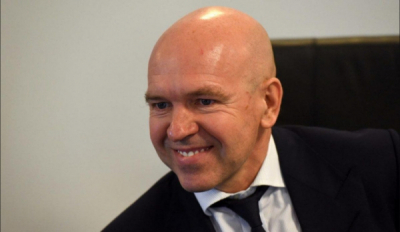

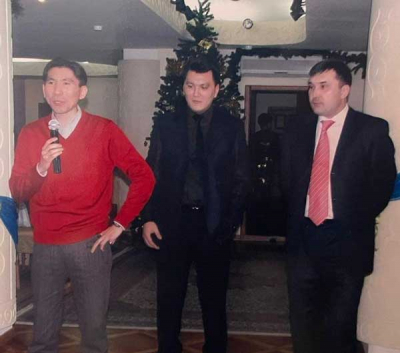
Rocket investor Timur Rokhlin launched an online cleanup after accusations of multi-million-euro scams
- 22.12.2025 07:33
Following the publication of an investigation into Rocket delivery service investor Timur Rokhlin, efforts to suppress the coverage and control the flow of information emerged. The piece, highlighting Rokhlin’s supposed part in a global fraud, led to a DDoS attack on Dev.ua and legal pressure from his legal team.
For our part, we are publishing the material that so greatly interferes with fraudster Timur Rokhlin.
Following the release of the investigation into Rokhlin, the online outlet Dev.ua came under a DDoS attack.
The website Dev.ua was subjected to a DDoS attack after publishing an investigation into food delivery service Rocket investor Timur Rokhlin, its editor-in-chief Stanislav Yurasov reported on his Facebook page. At the time of publication, the website remained inaccessible.
“Today, attackers are also trying to take down the website dev.by. On the day the attacks began, we published an investigation. It focused on Timur Rokhlin, an investor in the Rocket food delivery service. Ukrainian investigators seized his assets in Ukraine following a request from the Bamberg prosecutor’s office (Germany), where his name was mentioned,” Yurasov wrote.
It should be noted that the Dev.ua article stated that German law enforcement suspects Rokhlin of involvement in a large-scale fraud using pseudo-investment platforms, with damages estimated at tens of millions of euros, Delo reported.
Among other individuals suspected of involvement are Ukrainian citizens Andrey Kurochkin, Yuriy Kopacheskiy, Igor Kozlenko, as well as Israeli citizens Mikhail Chebotar, Maksim Baranovskiy-Rafael, and Timur Rokhlin.
As the outlet noted, citing Ukrainian investigators, €10.8 million in proceeds from fraudulent activities was transferred to a British company controlled by Rokhlin, and some assets linked to him were seized at the end of 2020.
The investigation in Ukraine was initiated at the request of the Bamberg prosecutor’s office. According to investigators, between 2017 and 2020 a group of Ukrainians and foreign nationals lured money from Europeans by offering investments in various assets and promising returns of 100 times or more.
The scheme used websites operating under the names Tradecapita, Fibonetix, NobelTrade, Forbslab, and Huludox, which allegedly traded in precious metals, currency, cryptocurrency, securities, and other assets.
According to law enforcement, when clients attempted to withdraw funds, they were contacted by individuals posing as representatives of the platforms, who demanded a service fee and a withdrawal commission of 15% of the amount. After payment, investors’ accounts were blocked and the funds were appropriated by the fraudsters.
The documented damage from the scheme amounted to €9 million. German newspaper Süddeutsche Zeitung reported that around 400 Europeans had contacted police after becoming victims.
“Rokhlin’s lawyers are intimidating us by claiming that disclosure of investigative secrecy carries criminal liability, even though the entire text is based on open-source data. It seems to me that they are simply trying to silence us,” Yurasov wrote.
Delo.ua requested comment from Rocket regarding the situation but has not yet received a response.
It is also worth noting that schemes to defraud unsuspecting investors via dubious websites are widespread in Ukraine itself. The National Securities and Stock Market Commission even maintains a separate registry of such internet resources, regularly adding new sites.
From time to time, law enforcement agencies also target the organizers of such activities. For example, in June the Security Service of Ukraine shut down an underground telecommunications center in Kyiv whose organizers had siphoned off nearly 9 million hryvnias from Ukrainian and foreign investors since the beginning of the year under the guise of attracting them to international investment projects.
That same month, the SBU reported blocking the activities of illegal call centers that posed as well-known brokerage firms and defrauded citizens of EU and CIS countries.
In March, the SBU also announced the dismantling in Kyiv of an organized group that misappropriated funds from Ukrainians by simulating stock exchange trading and cryptocurrency operations.
Maria Sharapova