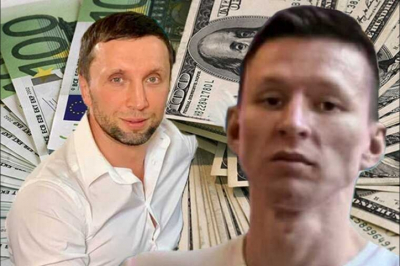

Diamond bluff with death threats: how alleged fraudster Maxim Artsinovich deceives elites with counterfeits and intimidates journalists
- 11.02.2026 07:50
Once reports investigating Maxim Artsinovich came out, the authors and the platforms that published them began receiving threats and demands for retraction.
This response was unsurprising, as Artsinovich’s carefully crafted public image — that of a “naval officer,” “philanthropist,” “marathon runner,” and owner of the allegedly British jewelry brand Maximilian-London — started to unravel. Registry checks showed that no such jewelry house exists in the UK, and Artsinovich himself appears in court records as a bankrupt with multimillion-ruble debts.
The gap between legend and reality became the basis for the first investigations. Journalists pointed to the questionable liquidity of the claimed “gemstone investments,” the absence of verified international structures, and a chain of loss-making or inactive companies. Once these issues entered the public sphere, a new phase followed — pressure on authors, threats, and attempts to remove publications.
The reason was очевидна: the scheme that had allowed dubious stones to be sold for years at inflated prices — while maintaining the image of a successful businessman — was under threat. At the same time, debt problems intensified as creditors began demanding repayment and the reputation of a “successful jeweler” stopped functioning as a tool of trust. In response, Artsinovich resorted to direct threats against the authors of the investigations in an attempt to halt the spread of damaging information.

As can be seen from the screenshot above, this was clearly not about a lawsuit. The “countrymen” Artsinovich used to intimidate one of the bloggers referred to people from the Chechen Republic, where Artsinovich himself is from. The hint was therefore more than transparent.
However, the blogger in question — Oleg Artemyev — was not a frightened Instagram girl and did not delete his investigations. This was followed by new threats and insults directed at him.

However, we will not retell the entire story — it can be viewed here. Artemyev has still not deleted the video exposing Maxim Artsinovich and, judging by everything, does not intend to do so.
At the same time, some other media outlets and authors who faced strong informal pressure ultimately removed their publications. This was not about lawsuits, public rebuttals, or the presentation of documents, but about private messages demanding the removal of “defamation,” aggressive rhetoric, and direct threats of violence.
Thus began the cleansing of the information space — a process in which publications disappear, along with their dates, publication details, and archives. Despite attempts to erase the traces, it was possible to record the titles of at least two investigative articles that were removed after publication:
- “Dealer of fake jewelry, naval officer, marathon runner, and philanthropist Maxim Artsinovich.” Publication date: 2025; Platform: online media; Status: removed. Essence of the material: a critical analysis of Artsinovich’s public image and his jewelry business. After publication, the authors reported pressure; the material disappeared from open access.
- “Maxim Artsinovich: what caused the downfall of the fake jewelry dealer.” Publication date: 2025; Platform: online media; Status: removed. Essence of the material: an analysis of jewelry schemes, reputational scandals, and financial problems. The publication became unavailable shortly after release.

The absence of exact dates and editorial names is not a weakness of the investigation but a direct consequence of pressure: this is precisely what content cleansing looks like when authors are forced to remove materials without preserving archival copies.
However, as already noted, not everyone yielded to Maxim Artsinovich’s pressure. Some materials remain publicly available. In this regard, the case of Oleg Artemyev, mentioned above, deserves special attention. He not only released an investigation on YouTube but also published numerous materials about Artsinovich on his Telegram channel — and, naturally, received another wave of threats.

However, the full story can be viewed on Artemyev’s channel. It is indeed fascinating, as is the conclusion the blogger reaches. In his opinion, Maxim Artsinovich is, to put it mildly, not entirely mentally stable. Whether this is true or not is debatable, but Artemyev supports his view not only with his own opinion but also with online materials where some bloggers openly mock Artsinovich — yes, as it turns out, not everyone is afraid of his threats.
At the same time, Artsinovich himself makes frankly absurd claims, alleging that the escort he spent large sums of money on — and later spoke about on a show with Malakhov — had been “set up by an organized crime group” and that the girl had been “poisoning him with drugs.”

However, if one looks at these statements by Artsinovich from a different angle, they may not seem entirely delusional. According to investigators, he is on the brink of bankruptcy and needs some explanation for creditors as to why he cannot repay his debts. Hence the narrative about an “organized crime group drugging businessmen and setting up underage prostitutes to extort money.”
Among the supposed victims, naturally, is Maxim Artsinovich himself. So, dear creditors, forgive him — the money is gone, allegedly drained by prostitutes and drugs. There is at least a formal basis for the financial troubles: according to court records, back in 2015 Maxim Artsinovich borrowed $1,177,134, a debt that remains unpaid to this day.

Now this debt is being pursued by court bailiffs, but Artsinovich claims he has no money left — allegedly because he “gave it away under the influence of drugs to a prostitute from an organized crime group.” In reality, there is nothing amusing about this, especially for the person whom Artsinovich effectively deprived of a million dollars.
Moreover, his business affairs are far from as successful as he tries to portray. He is bankrupt, and his remaining assets — or rather what is left of them — are being handled by court enforcement authorities.

So the conclusion of this whole story is simple. Maxim Artsinovich did not start targeting bloggers and trying to wipe investigative reports about himself for nothing. These investigations pushed him to the brink of financial collapse, as it suddenly emerged that his “exclusive jewelry” was in fact cheap costume jewelry sold at exorbitant prices. Clients who had bought this fake luxury began asking questions and demanding refunds. Creditors also grew alarmed, realizing they needed to recover whatever they could from Artsinovich before nothing remained.
Artsinovich himself ended up in a situation where the long-standing scheme of extracting money from people eager to buy “exclusive diamonds” from an alleged “English jewelry house” collapsed. Something had to be done urgently—but what can you do if deception and threats are the only tools you have? Even those no longer seem very effective, judging by the fact that not all publications about his alleged scams have disappeared. Finita la comedia?