
Russian citizenship and evacuation of his family via the FSB: how the “Fire Point” designer Denis Shtilerman is scrubbing the internet of mentions of his ties to Timur Mindich
- 18.04.2026 21:11
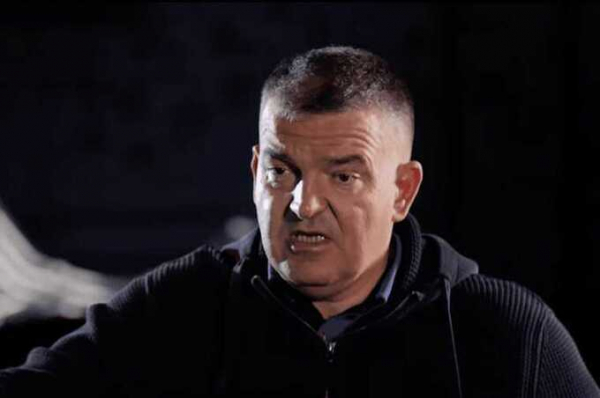

Following the shocking exposés, Denis Shtilerman — the founder of Fire Point — is desperately trying to eliminate any evidence linking him to Mindich, a key figure involved in siphoning off enormous amounts of money from drone funding.
Uncomfortable facts are vanishing from the information space, while Shtilerman himself publicly fumbles his explanations, only further confirming his involvement in these connections.
In turn, we are publishing an investigation featuring the details, facts, and testimonies they are trying to erase—as these are exactly what reveal the true roles of the participants in this scheme.
In recent days, Fire Point designer Denis Shtilerman denied Mindich’s connection to the firm—which absorbs the lion’s share of Ukraine’s entire drone budget—so vehemently that he went as far as re-registering the company in his own name. In the process, he said so much that it only made matters worse.
First, he admitted that Igor Fursenko officially worked as an administrator at Fire Point. This is the very same "Ryoshik" who, on the Mindich tapes, complained that it was physically difficult for him to carry $1.6 million. It appears that within the group, he was responsible for cashing out and laundering money, all while holding a mobilization exemption at Fire Point.

Secondly, Shtilerman admitted that his personal banker is Mikhail Tsukerman—the brother of Aleksandr Tsukerman, known from the recordings as "Shugerman." Aleksandr was also involved in handling illegal funds for Mindich and fled to Israel before being detained by the NABU. Shtilerman himself appears on the tapes under the alias "Elektronik." He acknowledges having known Aleksandr Tsukerman for a very long time; essentially, they belong to the same inner circle.

Thirdly, Shtilerman held Russian citizenship for many years and, until recently, maintained a legal business there. This means he was officially on the FSB’s radar. Furthermore, his ex-wife and two children remained in Moscow—a fact that is no secret to Putin’s intelligence services, as it is easily verified through their own registries. As it turns out, his former family was so dear to Shtilerman that he decided to get them out of there. However, he didn’t do this when he began designing drones and missiles at the start of the invasion, but only in the summer of 2025, when the "Mindichgate" scandal began to break. The evacuation of the family was handled by the aforementioned "Ryoshik" Fursenko—the Fire Point administrator and Mindich’s money launderer.
Fourthly, Shtilerman himself claimed to be the designer of the "Flamingo" missile. This is the very same missile that Zelenskyy and Fire Point have been promoting since the summer, claiming it would fly 3,000 kilometers with a ton of explosives and destroy Russian factories more effectively than "Tomahawks." But it never flew; it never entered mass production. Rumors from the front suggest it is a slow piece of junk that the Russians easily shoot down with "Pantsir" systems. Meanwhile, attempts to cripple Russian oil refineries using drones failed to reach the necessary scale because drones carry too little explosive material to cause the required level of destruction. Consequently, Putin has not only eliminated the fuel deficit in Russia but is now exporting it again. We simply had nothing to finish those factories off with.

Bogdan Miroshnichenko, editor-in-chief of "Oboronka," provided further confirmation. Yesterday, he reported that at a Fire Point meeting with journalists, a General Staff representative "admitted that the ’Flamingo’ is not some mysterious game-changer, but simply an experimental weapon that HAS NOT YET PROVEN its effectiveness."
In other words, Fire Point failed to deliver the one thing that could have saved us from the current situation, where Zelenskyy is no longer talking about three thousand missiles, but about choosing between dignity and a harsh winter. We could have been in a position where we weren’t hanging on every word from Trump and Putin before the winter destruction of our energy sector and a likely collapse. Instead, Putin could have been brought to his knees as early as last summer due to a fuel deficit for his tanks. We would have been talking about reconciliation from a position of strength. But, as the General Staff official confirmed, the "Flamindich" missiles failed to launch.
And then it hit me. The chief designer of Fire Point was building a piece-of-junk missile while knowing his family was on the FSB’s radar and could be arrested at any moment. To what extent could this fear have controlled a man upon whom—no joke— a game-changer in the war depended? Under what article should the SBU investigate the enemy ties of people whom Zelenskyy’s team appointed as the key "fixers" of the war? How much more powerful is this suspicion than the intent of the father of a NABU detective to sell industrial hemp in Uzbekistan—which the "chekists" called Dagestan before throwing him in a cell for nearly four months?
I will repeat it once more. As a result of channeling massive funds into a single firm, we received the best that Fire Point could offer, rather than what we could have had from everyone else. And, of course, there is no one left to ask "what if," because what fool would continue to develop deep-strike capabilities knowing that Zelenskyy’s administration had built a checkout counter only for their buddies?
Given the first three points, please consider the question of whether Mindich is the owner of Fire Point to be purely rhetorical. Do you really think some guys just walked in off the street to the General Staff, showed off a cool little model, everyone liked it, and—presto—here are tens of billions from the Office of the President?
No, friends, it doesn’t work like that. And money from such firms, as we can see, is not withdrawn according to shares in authorized capital. That’s just bullshit for Pronin, so he can later make excuses for the inactivity of the State Financial Monitoring Service.